

Improving Pet Care through a thoughtful Mobile Application
Problem Discovery
The project began with an exploration of how dog parents manage their pets’ health and medical needs. To better understand the challenges they face, I conducted early discovery research within online dog owner communities. I distributed polls in Facebook groups to gather initial insights into common pain points, daily routines, and the tools pet owners currently use to track and manage their dogs’ care. These findings helped inform the direction of a user-centered solution.
Initial Findings
Early insights from the polls revealed that many dog parents struggled most with managing their pets’ health and medical care. To better understand these challenges, I followed up by recruiting eight dog owners from the same community for in-depth interviews.
Through these conversations, several recurring themes emerged: These insights helped clarify a key opportunity—supporting dog parents in navigating and managing their pets’ healthcare more easily.
Veterinary care can be expensive
Appointment availability is often limited
Quick access to vets is often limited
Problem Overview
Dog parents want high-quality medical care for their pets, but increasing demand has made veterinary services both difficult to access and costly.
“Most of the times the problem is just a small scare, but it is so difficult to find an appointment and just the visitation charges are exorbitant”
- Interview Participant
Secondary Research
As part of the research process, I explored emerging technologies that are expanding access to healthcare services, particularly telehealth. I focused on this area because technology has the potential to bridge several existing gaps in veterinary care—such as high costs, limited availability, and access challenges that became more apparent during the pandemic.
Growing Pet Ownership
Nearly 50 million U.S. households own at least one dog.
The average dog owner has 1.7 dogs.
Pets are increasingly viewed as family members, leading to higher expectations for quality healthcare.
💡 Key Insight 1:
Demand for veterinary services continues to rise as pet ownership grows.
Telehealth is Expanding Access to Care
Telehealth adoption increased significantly during the pandemic.
The American Veterinary Medical Association encourages the use of virtual care for veterinary support.
💡 Key Insight 2:
Remote healthcare services can help bridge the gap when in-person veterinary care is difficult to access.
AI Can Provide Immediate Guidance
AI chatbots are increasingly used in healthcare to provide instant support and information.
They allow users to access guidance without waiting for appointments.
💡 Key Insight 3:
AI-powered tools can help dog owners get quick answers and initial guidance for health concerns.
User Survey
Following the secondary research, I conducted a user survey to better understand the challenges dog owners face when managing their pets’ health. The survey was designed to identify the right participants for follow-up interviews and gather initial insights into their experiences. I received nearly 50 responses, which helped uncover common concerns, frustrations, and fears related to pet healthcare.
Top Survey Insights
Participants reported that veterinary care is very expensive
Participants often search online for answers to their pet’s medical concerns
Participants said many vet visits are triggered by minor health scares
User Interviews
To gain a deeper understanding of dog owners’ concerns, motivations, and behaviors, I recruited 10 participants for short remote interviews conducted via platforms like Zoom and Google Meet. These conversations helped uncover more specific challenges and needs related to managing their pets’ health, which later informed key design decisions.
During the interview, I focus on few core question:
What frustrations do you experience when visiting the vet?
What is the biggest challenge you face when managing your pet’s health?
How have these challenges changed since the pandemic?
Have you ever used an app or online service for pet medical support? If so, what was your experience like?
These interviews revealed a major insight:
Many dog parents tend to overlook preventive care because veterinary services are often expensive and not easily accessible.
At the same time, participants expressed strong interest in online healthcare options, noting that virtual support could offer a more convenient and cost-effective way to manage their pets’ health.
These interviews helped uncover four key insights that shaped the direction of the solution.
💡 Key Insight 1: Availability
Participants showed interest in online consultations for quick guidance, especially when veterinary appointments were difficult to secure.
💡 Key Insight 2: Cost
Many participants felt that veterinary care is expensive, particularly for minor issues, and noted a lack of transparency around pricing.
💡 Key Insight 3: Time
Participants expressed frustration with the time required to travel to clinics and the long wait times once they arrived.
💡 Key Insight 4: Availability
Participants found it inconvenient that their pets’ medical information was not stored in one centralized place, making it difficult to manage and access records.
User Persona
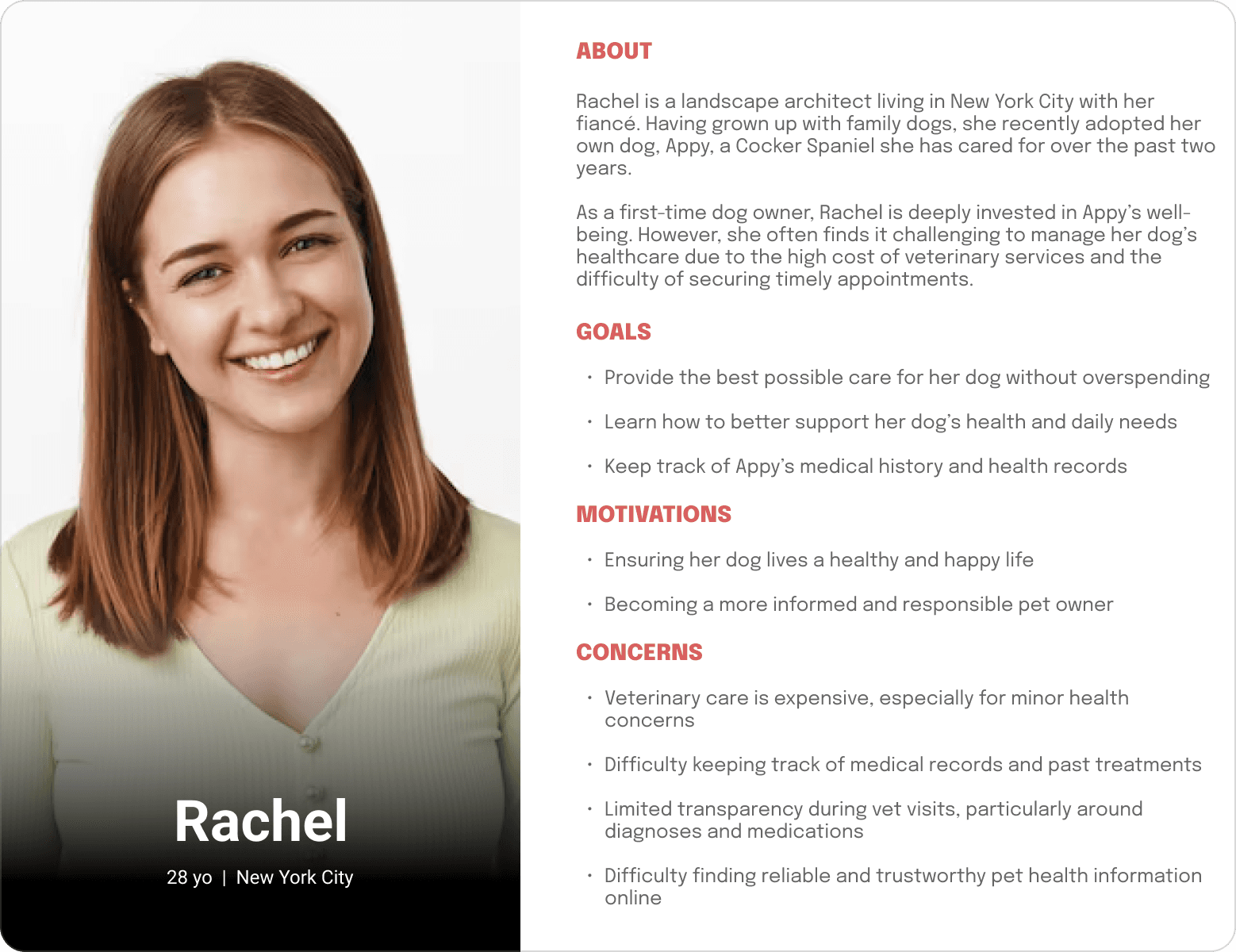
Based on my research, I created a persona—Rachel (28, Architect)—to represent the primary target user. This helped me better empathize with the needs, goals, and challenges of dog parents and prioritize features that would address their most important pain points.
Problem Statement
“How might we improve access to veterinary care and tools that help dog parents manage their pet’ health more effectively?”
First Cut of the Design Solution
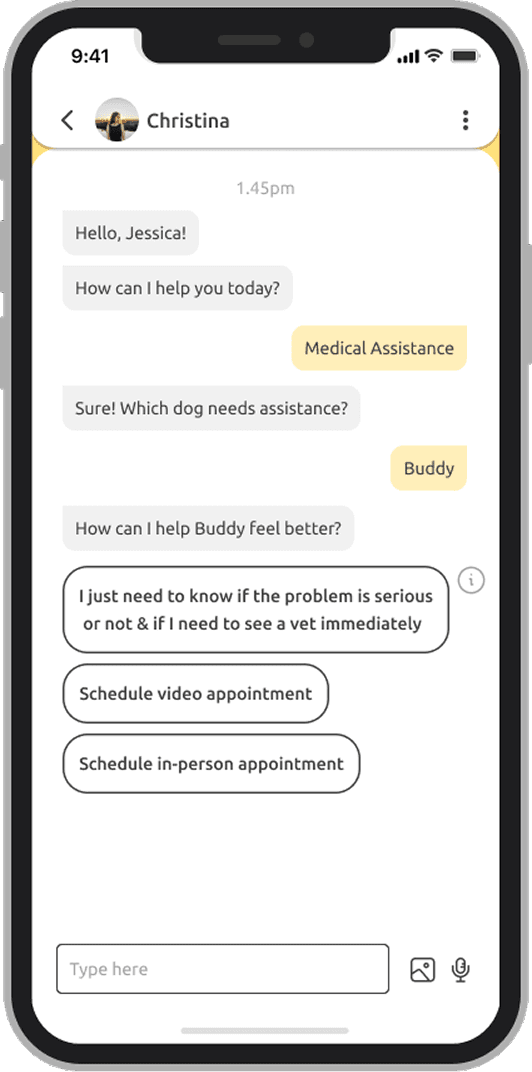
Based on the research findings, I explored the concept of an AI-powered chatbot that could help pet owners quickly assess potential health concerns. Given the growing number of pet owners compared to the availability of veterinarians, the chatbot would act as a pre-vet support tool, providing initial guidance and helping users determine whether professional veterinary care is needed.
AI-Supported Product Experience
Simplified Medical Record Management
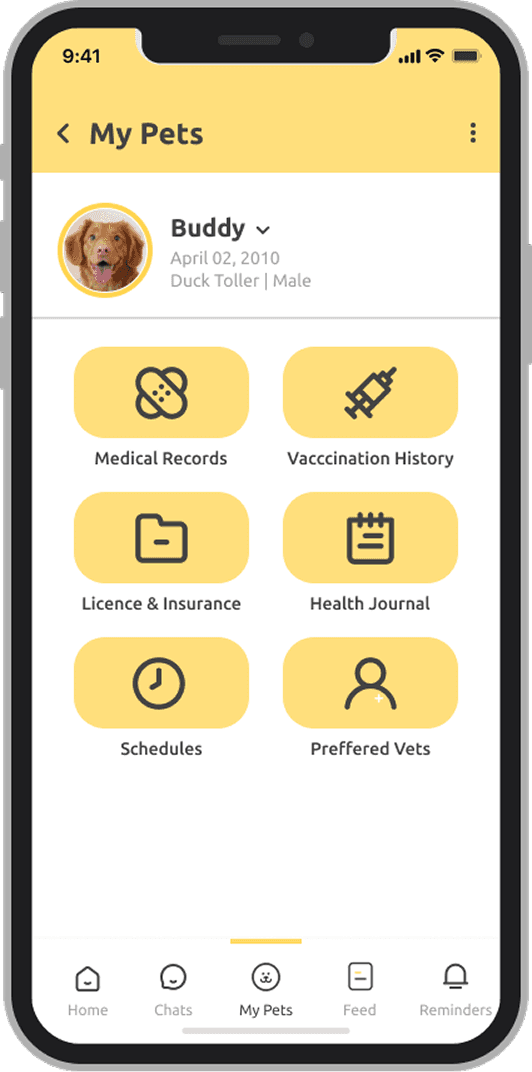
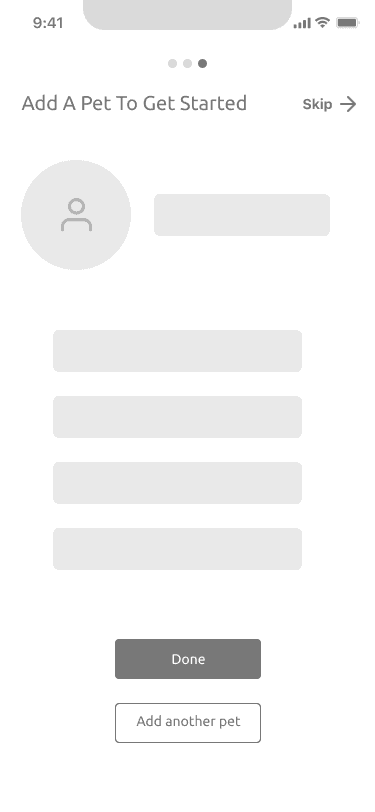
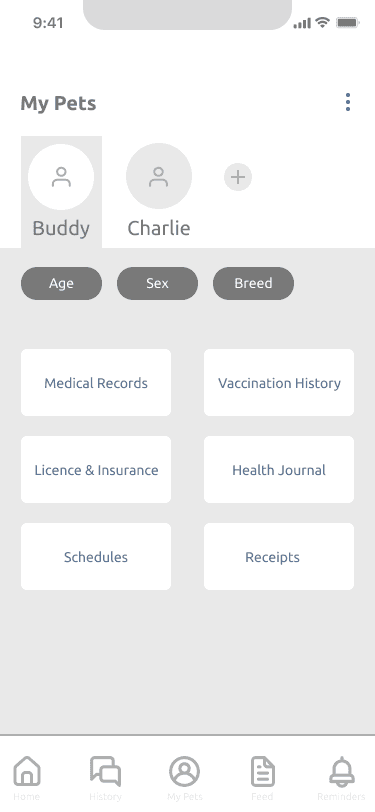
Pet parents can store and manage all of their pet’s medical records in one place, making it easier to access and organize important health information.
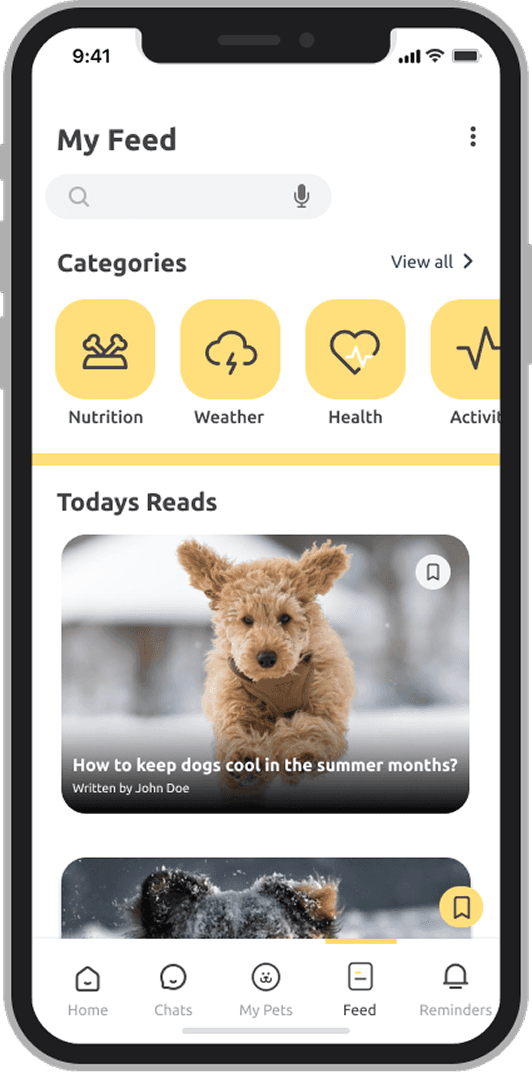
Personalized Health Insights
A curated feed of articles and guidance tailored to each pet, enabling owners to make more informed health decisions.
Sketching + Wireframing
Before moving into the UI design, I started with some quick sketching and then created low-fidelity wireframes to map out the core screens and user flows. This helped me focus on functionality and structure without being distracted by visual elements such as color, typography, or branding.


Usability Testing
I conducted five moderated remote usability tests using platforms like Zoom and Google Meet. Participants were asked to complete a series of tasks to evaluate the usability of the initial concept.
Key Tasks:
Complete the Onboarding Process
Assess the severity of a health issue (scenario: Buddy has a rash on his paw)
Book a quarterly health check-up through the chatbot
Update the pet’s health journal
Find articles related to Buddy’s medical issue
💡 Key Insight:
Users were hesitant to discuss their pet’s medical concerns with an AI chatbot and expressed a stronger preference for direct access to veterinary professionals.
Humanizing the Experience
Initial Setback
The AI chatbot was intended to act as the primary entry point for medical guidance.
However, users did not feel comfortable relying on a chatbot for diagnosing their pet’s health concerns.
This indicated a misalignment with users’ mental models and trust expectations around pet healthcare.
New Direction
To better align with user needs, I evolved the solution rather than removing the chatbot entirely.
I introduced a “Find a Vet” feature, allowing users to directly search for and book appointments with veterinarians.
The chatbot was repositioned as supportive guidance, while the vet discovery feature provided a trusted path to professional care.
This shift helped balance convenience (AI guidance) with trust (access to real veterinarians).
Final Screens
Future Roadmap
Given more time and resources, I would..
Conduct deeper research
Explore pet owners’ behaviors across different demographics, cities, and dog breeds to better understand diverse needs.
Expand AI capabilities
Improve the chatbot’s accuracy and add natural conversation flows for more complex health scenarios.
Community & support
Introduce forums or chat groups for pet parents to share tips and advice, moderated by veterinary professionals.
Key Takeaways
Pet health is personal
Dog owners treat their pets like family, but cost, accessibility, and trust are major barriers to proper care.
Gap in healthcare
With 90M dogs but under 100K vets in the U.S., digital solutions are needed to support pet parents.
Test early, test often
Early usability tests revealed misalignment between the AI-first approach and user expectations, leading to a stronger, hybrid solution.
My Role
Product Designer
Client
Stealth Startup
Duration
2021 - 2022